Lecture and Research
Lecture – Stuart Tolley and Darren Wall
He set up his own publishing company based in Barcelona. After working on book covers in the publishing industry he gained valuable insight into how the industry worked.
When you create a traditionally published book, the important thing is creating a object or cover that grabs peoples attention straight away, amongst a sea of other books in a bookshop.
Self publishing is very different. He set up Read Only Memory in 2021, to create beautiful objects for people to keep in their home, about things they care about.
He creates really beautiful, opulent books about the computer game industry that look like art or design books.
He takes something ‘low culture’ and channels it into a ‘high culture’ object. Through this he has found a niche but string market of people who love video games. He uses publishing and graphic design to elevate the subject.
When creating a book, he generates a lot of content and does lots of research. Speaking to experts, collectors etc. He carefully researches different production methods to make his books extra special.
Self publishing these books means he can do whatever he wants with them. But he still talks to his audience to work out what look, feel and size etc. that they like.
He used kickstarter as a way of funding his books. Once an audience is built up, you can bring more and more books back to them.
When you create a book on kickstarter, the project is completely yours, you’re exposed financially and personally. Though a traditional publisher you loose some of this flexibility but your book is allowed a much greater audience. Some people start with a kickstarter and then go to a publisher’s after to show how the had success the first time, so they can be allowed more freedom and trust through the traditional publishing process.
He believes in the importance of using experimental production techniques and high quietly print to create an object that people will keep for a long time. He also stresses the importance of finding a good printer who is invested in your product and can help you create something really special.
Don’t compromise, make what you love and want to make. Make something just for you.
Angharad Lewis explains how distribution is also important. Distribution is hard for independent publishers. You can use a professional print distribution company or do it yourself.
With infrequent and small runs can do yourself, but using a distributor increase circulation and reach but decreases profit. Choosing a distributor is a careful decisions to ensure they send it to the right places. Payment is slow, taking a few months.
You might start out doing distribution yourself and then move on to a distribution company when you have grown sufficiently.
“Selling copies yourself, direct to readers, guarantees you the best margins. But you need to be proactive and drum up business by driving traffic to your online shopfront. Social media is a powerful tool here, as is an email database of people to whom you can send newsletters.”
“Sell as many copies as you can yourself, that way you get all the money!”
Luke Wood, Head Full of Snakes
Many magazines are launched with personal savings or crowdfunding.
You can make money through your project with copy sales, Subscriptions, Advertising, events or additional products. After one issue, make sure to go back and look at what you can tweak to make it more affective.
She also stresses the point that you should make sure to find a good friendly printer who understands your product. Quality of print is so important.
Looking through previous kickstarter campaigns it is clear that they are incredible varied and allow people to make exactly what they want or believe the world needs.

It allows more niche projects to come to life that might not be picked up by traditional publishers.

I think in a way this makes the projects more real and passionate as the investors feel much more personally invested in the project than someone who buys a book in a shop does.
Looking at other books made by designers I came across the beautiful books by Malika Favre. She uses publisher and distributor Counter-Print to launch her book. But as she has established her popularity and career already she doesn’t need to self fund the project.


https://www.counter-print.co.uk/products/malika-favre
On the other side of, Oh comely magazine is published by iceberg press. Three friends from publishing background, invested savings and loans to set up their own publishing company. https://ohcomely.co.uk/magazine

This has now grown to become really successful.
Workshop Challenge.
While reading through and editing my essay this week I started to think about how to best produce it and who I wanted to see it.
Final Essay – We need to talk about periods?
What am I trying to do?
Get people to start talking about periods and reduce shame and stigma. They are normal, they are healthy- raise the status of them through design to make them respected – make a point – fight for change and equity
Most important – I want to get people talking about periods
Who am I trying to reach?
I think mainly women would be interested in the book, but I want to try to appeal to everyone
I am not aiming this at people with period poverty – they wont buy something unnecessary and know the issues. The younger generation are likely to be more receptive to the book, however again I don’t want to alienate any potential readers as the more people who are comfortable reading it, the further the message will spread.
To get people talking I need the book to be provocative but also approachable. I need to grab peoples attention, but be careful not to be vulgar or too bold.
To start with I liked the idea of making some kind of period product packaging that included the essay, but then this would only reach people who menstruate, cutting out a big potential audience. Making it into a book or magazine is much more inclusive.
I like Darren Wall’s idea from the lecture about using the production and design to elevate the status of a subject. I think this is really relevant for the conversation around period equality. If I can make my essay into a beautiful book that wouldn’t look out of place on a coffee table, hopefully I can also elevate the conversation around periods to be something more accepted.


I looked at the colours I wanted to use and red was an obvious choice. I chose a red that was deep and bold but not too bright. I took some photos and then edited them with this colour to create some blocky designs that I hoped would elevate ordinary things associated with periods to a higher more artistic level. However the images looked a bit too shocking and reminded me of a crime scene in a way, which is definitely not the vibe I had in mind.

I played around with other colours to balance with the red and found that using two shades of pink worked well to make the design look more approachable and stop the red from looking too shocking.
In my printed product I would use nice thick, textured paper to make the colours look and feel luxurious and to make my book reasonably heavy and chunky. I like the idea of using a variety of different paper types throughout the book, so you don’t know what is going to come next. I think this nicely reflects the diversity of experience that comes with periods. Everyone experiences them differently, and even just for one person, each period can be totally different to the one before.
To ensure my work stayed approachable and inclusive I thought bringing a touch of humour into the work could be a good idea. In my research I found that there are over 5,000 different slang words for periods across the world, some of which are hilarious. I selected a few of these and designed a simple typographic layout of them in my chosen colours. They looked bold, open, honest but also welcoming in their humour. As there are so many of these slang words available, I decided to try using them every other page, they would break up the text (which at times can be a bit heavy going) and also unify the whole design of the book.


I looked back at the layouts from the women’s magazines I had used as part of my mood board last week.
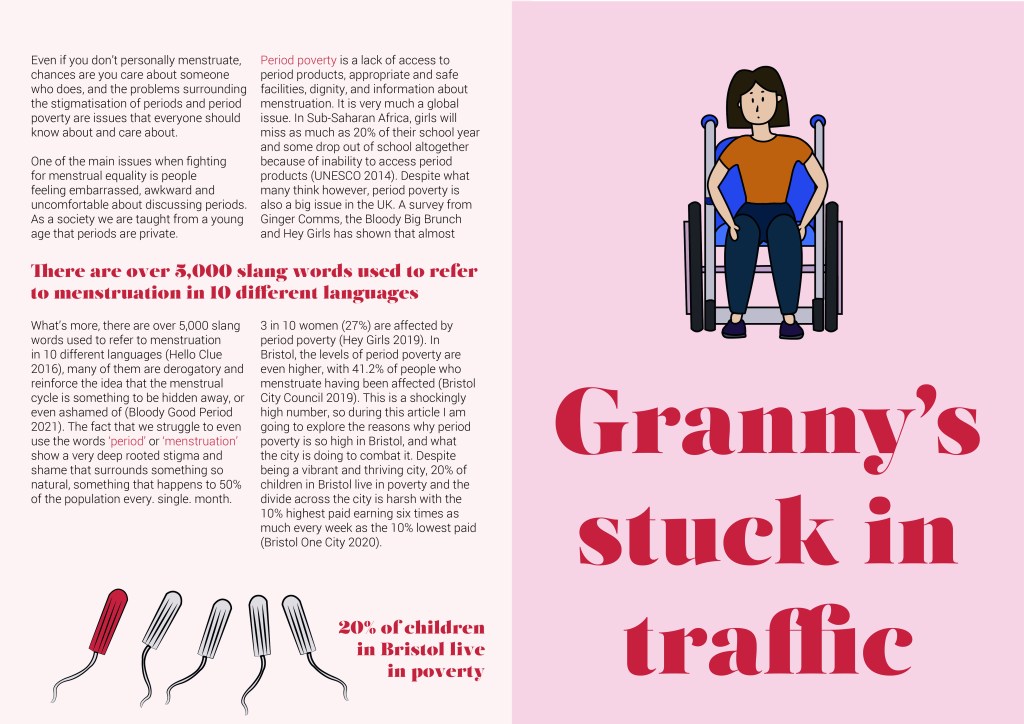
I included my people illustrations that I came up with in week 6, to populate the design, as well as some simple infographics in the same style to clearly show key points.


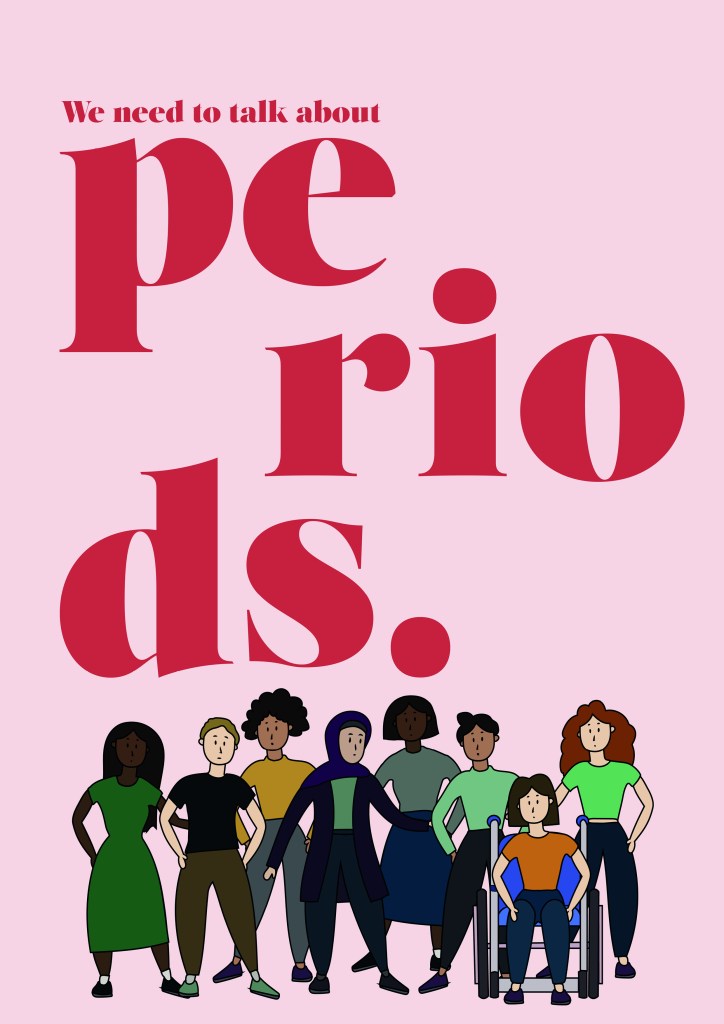
Reviewing this design, I felt as if it may be becoming too bland and palatable, having moved a bit far away from the real and honest story I was trying to tell.
Unsure of how to progress, I decided to play around with some materials I had. I got some red paint and a variety of brushes and started making marks on some paper to see what it inspired. I also played around with some red string and photographed all my experiments.


I tried adding some of the paint marks on top of my design. This bold and more graphic style, mixed in with the approachable colour scheme and illustrations, gave the piece the feel I was looking for. This mix of styles also shows the diversity of experience between people who menstruate further.
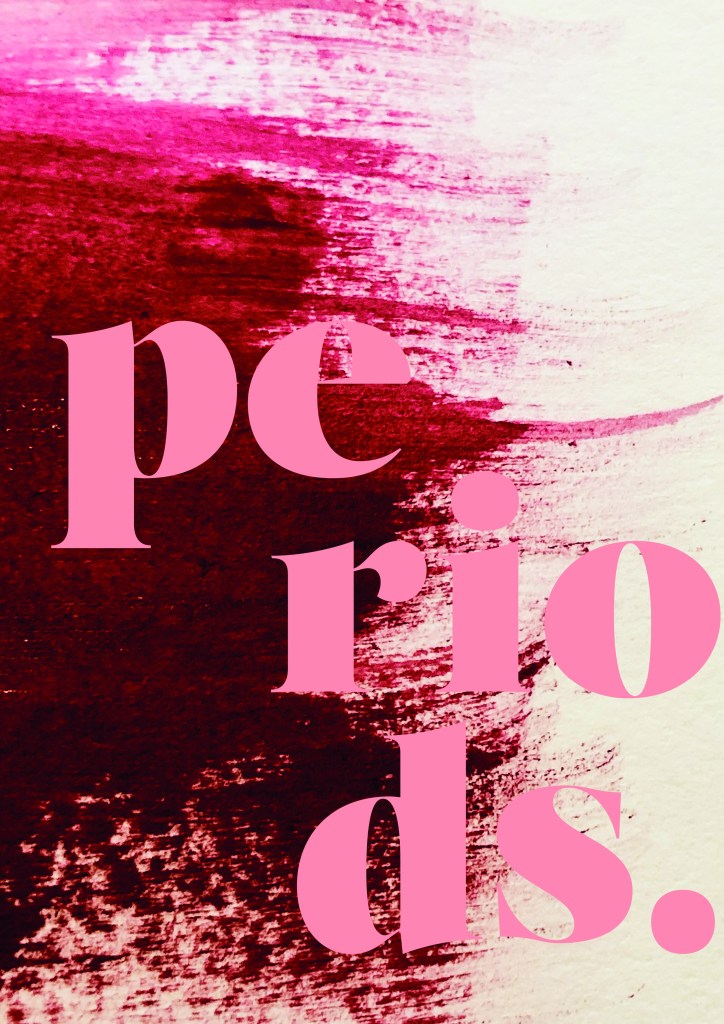
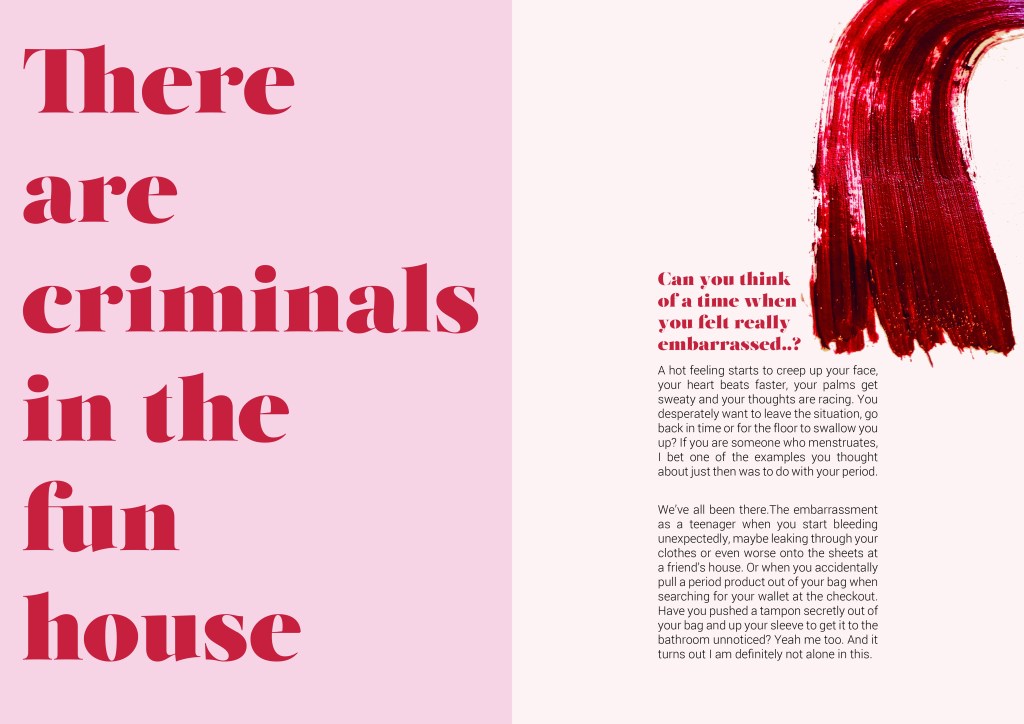
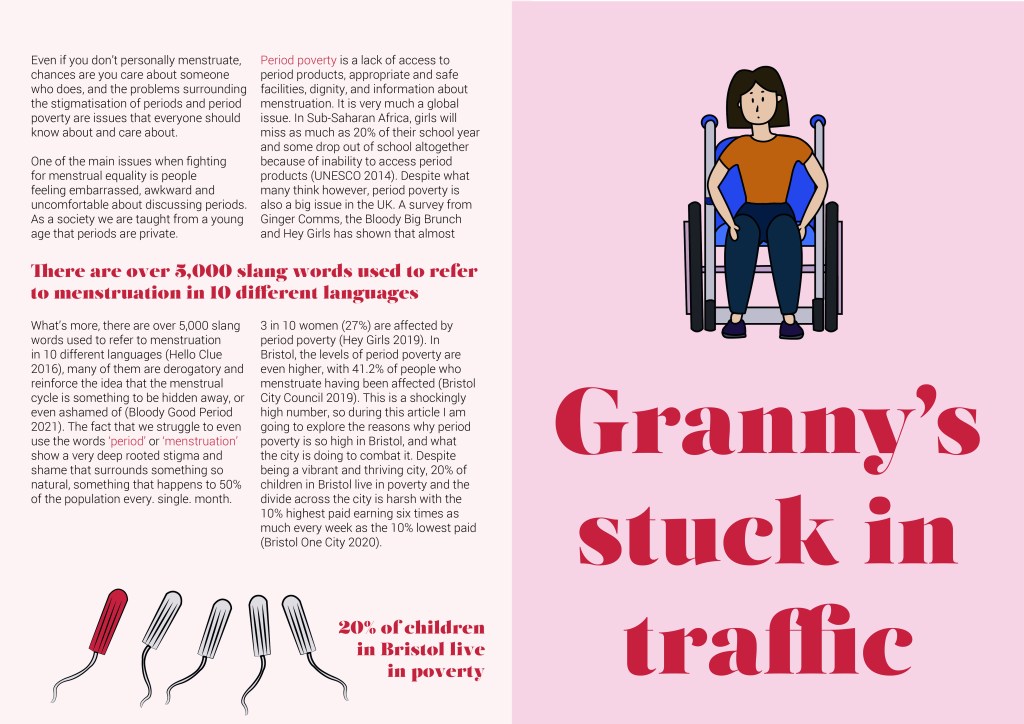
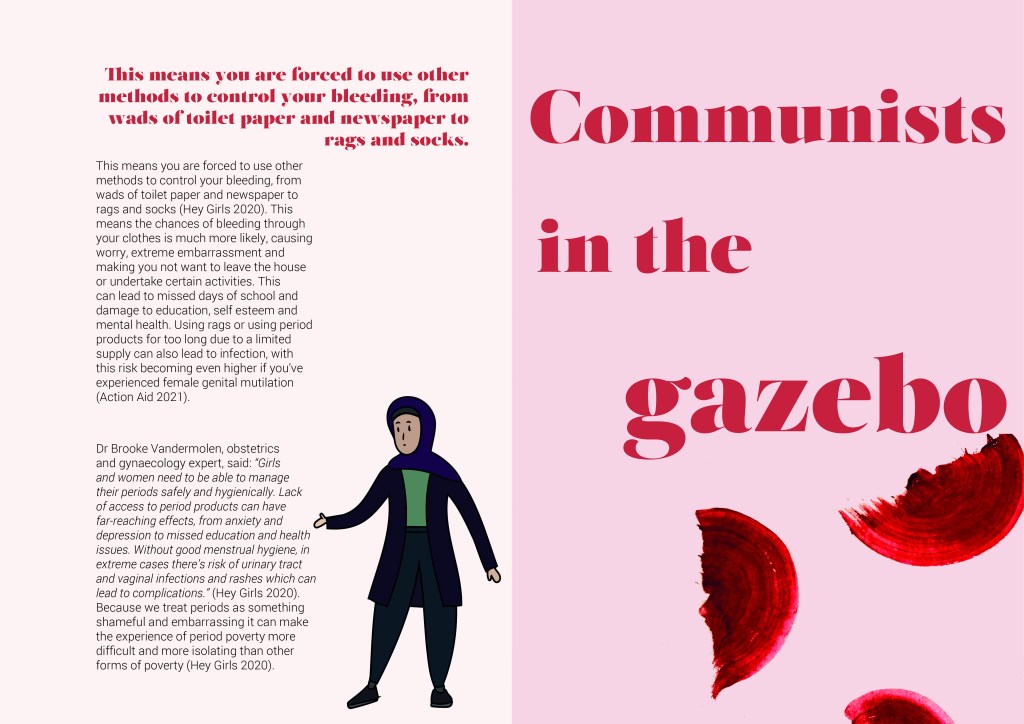
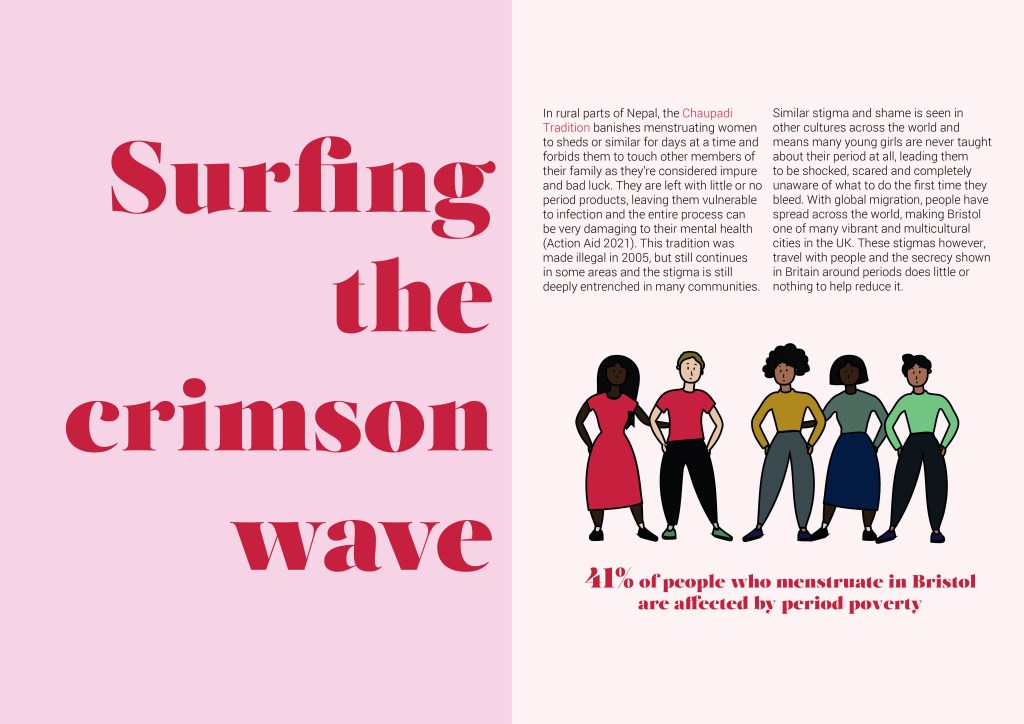
I liked the use of red string, as I felt like a subtle nod towards a tampon, so decided by book would be string bound using it.
I worked out that in the way I was designing it, my book would end up being around 60 pages long.
Final outcome
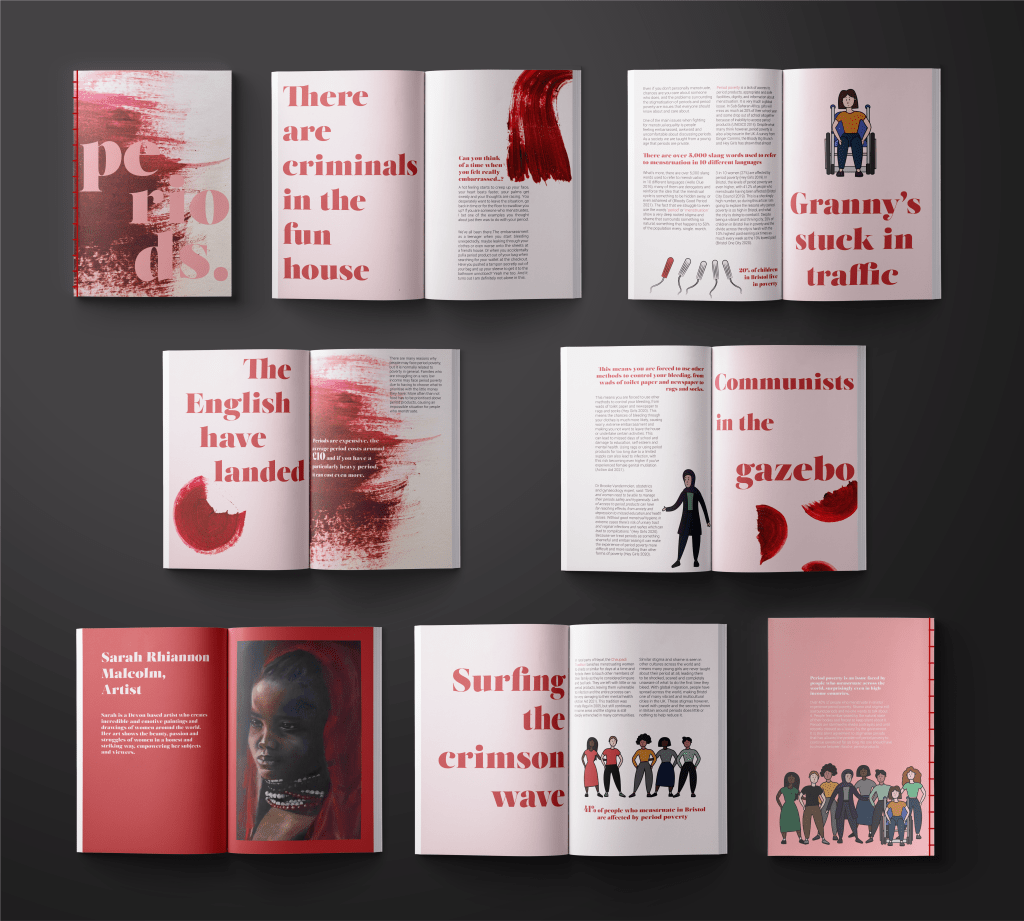
My book would be printed using thick, textured paper, that changes throughout the book to represent the diversity in experience of menstruation. It would be bound with red string. The design and layout of the book varies throughout to again deepen the idea of how everyones experience is different, but the inclusion of the period slang words, font and colour scheme tie the design together throughout.
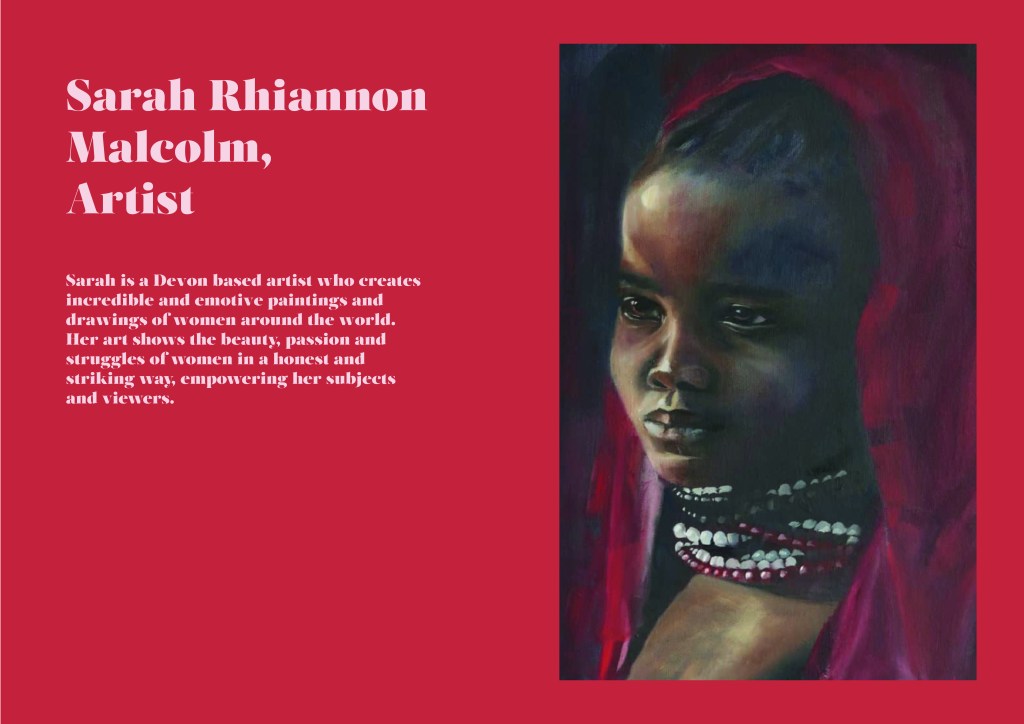
The case studies included with my essay would be used within the book as well to add a more human side to the story. Ideally with more time I would like to source my own case studies and include some photography of the individuals alongside them. However, I have just included these ones for now as examples.
To add another dimension to the book that would make it more collectable and special, I would get female creatives to take over a double page spread each, spaced out throughout the book to include an empowering work of art/poem etc. along with a short bio. Ideally I would like to use some refugees, or people who had experienced period poverty to create some of the works of art as I feel that would make the book itself even more powerful.
Fund, promote, market, launch
To fund my book I would launch a kickstarter campaign. I think getting people invested in the book idea, talking about it before it is even created and becoming a community of people who care about gender equity would be a really great experience. Having looked through previous kickstarter campaigns I feel like it is a good place to tap into a niche and passionate audience, who would support the idea and share the story with others.
Ideally I would like the profits of the book to go to women’s charities, so it would be reasonably expensive but clear that buying the book would be supporting women in need. The book would be marketed in partnership with the charities I would support as well as other period charities as it is inline with their message. I would reach out to sustainable period product brands to help market the book.
To launch I would work with Bristol council during their next ‘Period Poverty Summit’, and host a exhibition of art, illustration and design created by the women who feature within my book, along with talks about period poverty and creating an equal society.
Reflection
Bringing this project to an end felt really satisfying. I enjoyed the process of letting the final design of the book evolve as I researched and wrote my essay. I needed to hit quite a delicate balance with this book to ensure it was impactful and started conversations, but wasn’t shocking or vulgar. I also set myself quite a difficult challenge as I wasn’t really able to use any photography within the book, as periods are not a photogenic subject matter. Therefore I had to ensure the book stayed visually interesting without any photographic imagery.
I am quite happy with how this turned out. I think the book is varied and attention grabbing but without looking shocking. I also enjoyed the process of researching and writing my essay and believe I have unearthed some interesting insights that were previously unknown to me and many others, so I hope my essay will be interesting reading. Hopefully it will achieve my aim of getting some more conversation going around the subject of periods and lift the stigma slightly.
I would love to have been able to spend more time researching and exploring print and production methods and to make my book into a finished and printed product. I think working with a specialist printer would be really exciting, allowing their insights to help me create a book that is really beautiful and well produced. I would also want to research the environmental impact of the book, ensuring I chose eco friendly papers and inks. As I came to this subject matter while thinking about the environmental impact of periods I think it is only right to finish full circle.
References
LEWIS, Angharad. 2016. So You Want to Publish a Magazine? London: Laurence King Publishing.


Leave a Reply