Lecture Notes
Develop and check ideas
- Christoph Miller – get your hands dirty as soon as possible. Try out ideas and challenge them. Taking a step back and a break is important too so you can look at a problem with fresh eyes.
- Veronica Fuerte – takes time to create simplicity.
- Vince Frost – reflect on it lot. Print out design and look at them a lot. He is the client.
- Sam Bompass – absorb lots of information from lots of different cultural places. “I use sleep as an active working process”
- James Stringer– iterative process. Workshops to get an outside perspectives. Go through project after as a group and discuss how things went.
Production risk and ambition
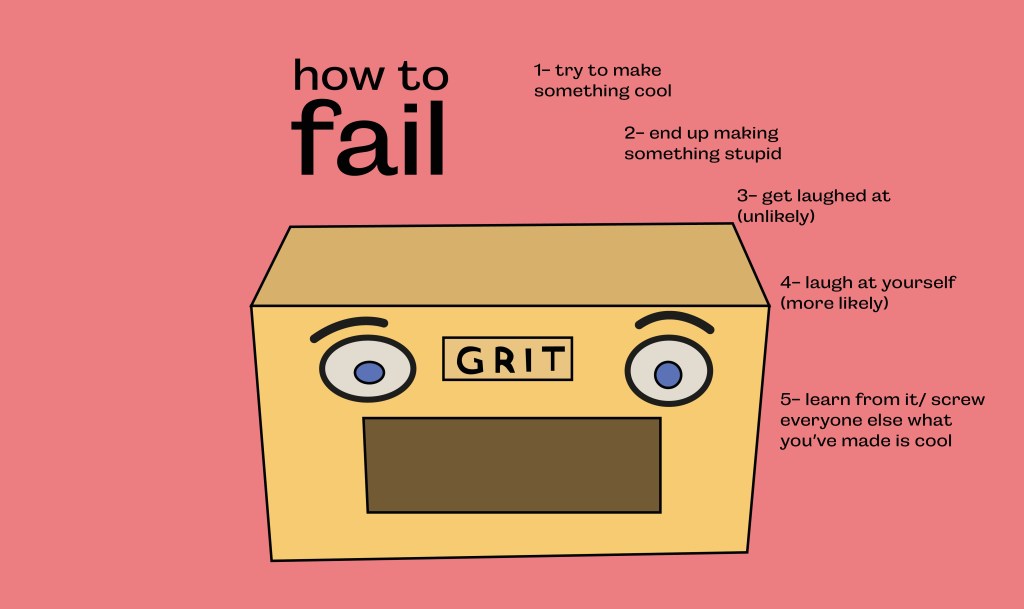
- Christoph Miller – learning and failing is also important. Try new software or do something never done before, new print techniques, new ways of thinking etc. But need to ensure that with all these things you still move forwards. Go to the printer whenever possible.
Lecture reflection
In the development stage of a self initiated project, it seems that is it important to take a step back, evaluate what you have done and try new ways of approaching the issue. Christop Miller believes that failing is an important way of learning and that a self initiated project is the perfect place to try new things, softwares or ways of working.
I think this is something I will take forwards into my project as it is also a very childlike way of approaching things. Children are not as scared of failure as adults and are naturally inquisitive about trying new things.
I also think Sam Bompass’ comment that he uses “sleep as an active working process” is fantastic and I might adopt this idea myself for all things.
Research
Why Children’s Drawings matter – Delphine Burrus – School of Life
Burrus talks about how our love of children’s drawings may stem from the fact that they are an opportunity to remind ourself of our true needs of play, creativity and naivety. To remind ourselves that we don’t need to be the best at things, just enjoy doing them. They act as a map of who we should remember to be.
Children create bold, vivid and wonky drawings.
“We live in a world of highly complex technology, extreme precision in science, massive bureaucracies, insecurity and intense meritocratic competition. To survive with any degree of success in these conditions, we have to be exceptionally controlled, forward-thinking, reasonable and cautious creatures.”
(The School of Life 2014)
Society is sensitive to things it missing – world needs precision, sensibility, control and cautiousness just to get by- children drawings have hints of our previous personalities where we didn’t think about those things.
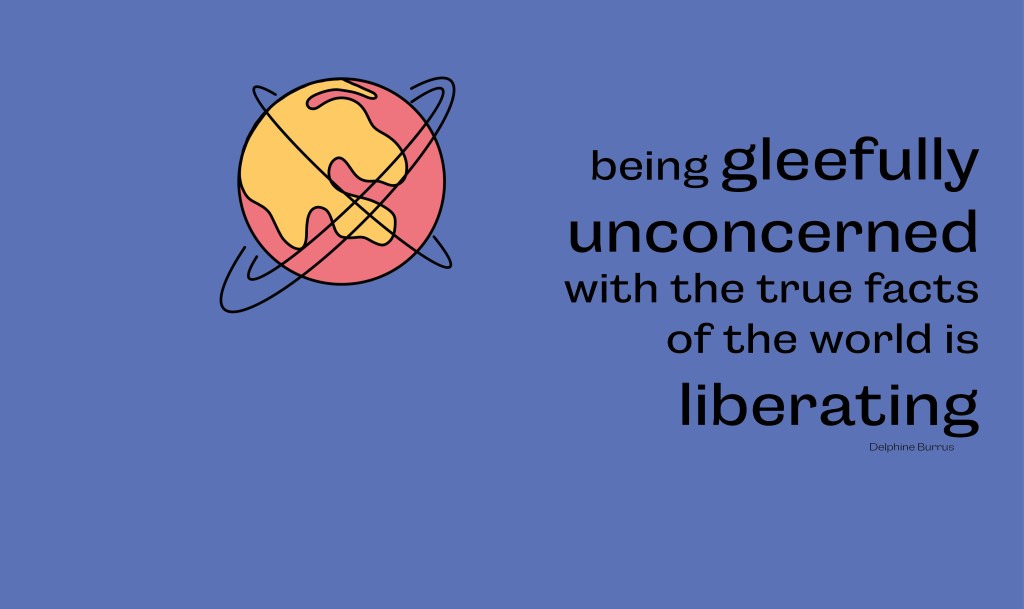
Their drawing are always inaccurate – children don’t worry what things really look at or care if they are good at being gleefully unconcerned with the true facts of the world – and this is liberating. (The School of Life 2014)
The Importance of Play
The importance of play in life was first explored by the Ancient Greeks. The god Dionysus was concerned with the imagination, impatience, chaos, emotion, instinct – and play.
“The useful thing about children is that they don’t let their imaginations get hampered by the more irritating or incidental aspects of reality.”
(The School of Life 2021)
“Most impressive developments have been works of the imagination long before they were feats of engineering or politics, art or science. They were ideas that needed to be pictured with a fanciful, confident and unfrightened mind, one that would not curtail its freedoms by pointing out that something might cost too much, or that some members of the team might be unsettled by an innovation, or that there were government rules against that sort of thing.”
We need this childlike way of thinking to imagine new possibilities that can bring our planet and out society into a better future.
Many things that are normal to us now, like flying, were once in someones imagination and dismissed as ridiculous and impossible.
Unhampered play seems to be the thing that connects us to creativity. It is important at times to think and play as a child does, not worrying about the technicalities of an idea and instead imagining what you want to create. (The School of Life 2021)
The importance of play as an adult
“When children engage in play, they are actively developing their cognitive, physical, social, and emotional skills without realizing it. One we reach a certain age; however, those skills develop to the extent that playing in a sandbox or throwing a ball around no longer seems appropriate. But when we lose play through the transition into adulthood, we miss out on several different benefits.”
(Miles 2020)
As an adult playing helps you to feel restored, it benefits your mental health, alleviates stress and boosts creativity.
“don’t be afraid to try something new in your pursuit of play.”
(Miles 2020)
Yolanda Tyler – Ted Talk
Work life balance doesn’t leave time for play. It affects mental health, or bodies and our families. We are in work mode far too much.
It makes people into equals when they play together.
Play creates community – it shapes social interactions and builds bonds. Its creates interesting ideas and concepts. How can I live more creatively? (Tyler 2019)
Research Reflection
Playing, being comfortable with failure and being ‘gleefully unconcerned’ with the true facts of life seem to be three very important parts of what gives children such a captivating and creative view on the world. As adults, getting back in touch with these things feels uncomfortable, unnatural and at odd with the way we feel we should be. However, the benefits are huge. Adults who play, don’t fear failure and ignore the ‘true’ facts of the world can be much more creative, they can think big, really big, and it is these big, bold, creative thoughts that could change our world for the better.
Getting back in touch with your inner child also boosts your wellbeing, helps you to relax and add more balance to your life.
I want to take these ideas and house them within my magazine, I want it to educate, inspire and make the reader want to play and create.
Child Research

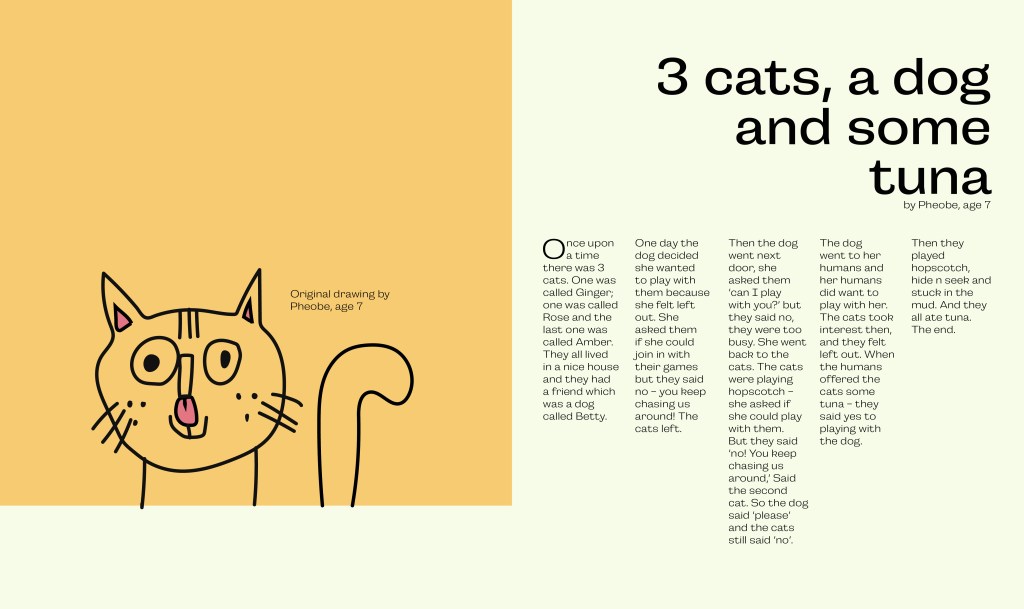
I got some feedback from my questions asked to children, including some brilliant answers and additional content from Pheobe aged 7. It only took minutes for her to come up with the content, she just went for it without worrying if it was good enough.
- Adults are not as good at being creative as children are. Why do you think this is?
I think that’s because adults when they were children used to draw and as they grow up they don’t do it that much. Maybe they don’t as when they were teenagers they had to concentrate on their work more than drawing. Sometimes when you like food you used to like it but now you don’t. If you switch it to drawing, it’s the same thing. When they are a grown up and they have a child – their child says ‘can you do a drawing with me for fun?’ The adult finds they can’t do art as good because they are older. - What could adults do to make them more like children?
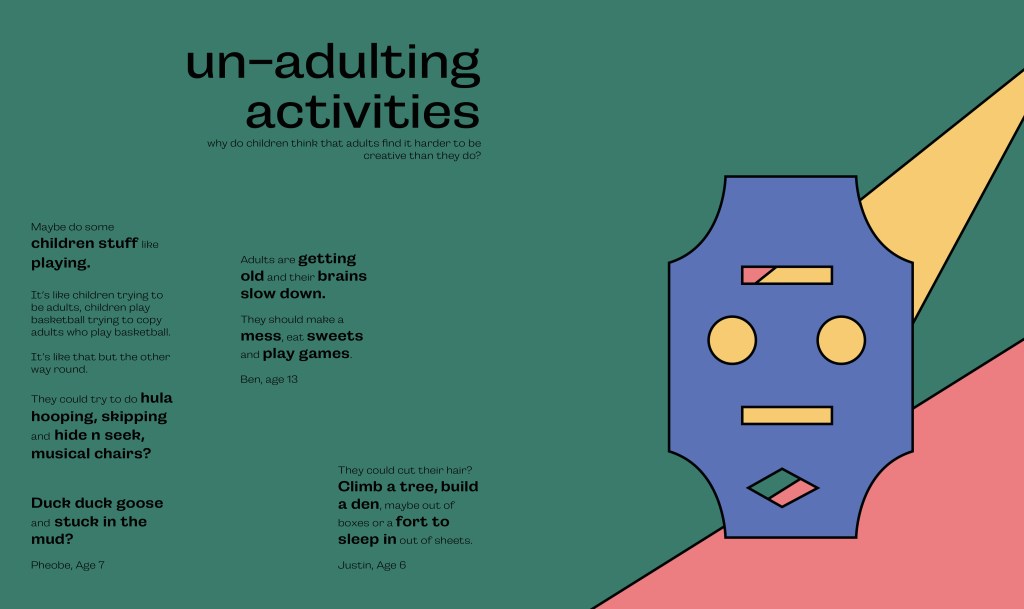
Maybe do some children stuff like playing – it’s like children trying to be adults, children play basketball trying to copy adults who play basketball. It’s like that but the other way round. They could try to do some hula hooping, skipping and hide n seek, musical chairs. Duck duck goose and stuck in the mud. - Funny joke: why did the cow cross the road? To get to the moooo-vies. 🐮
- Story: Once upon a time there was 3 cats. One was called Ginger; one was called Rose and the last one was called Amber. They all lived in a nice house and they had a friend which was a dog called Betty. One day the dog decided she wanted to play with them because she felt left out. She asked them if she could join in with their games but they said no – you keep chasing us around! The cats left. Then the dog went next door, she asked them ‘ can I play with you?’ but they said no, they were too busy. She went back to the cats. The cats were playing hopscotch – she asked if she could play with them. But they said ‘no! You keep chasing us around,’ Said the second cat. So the dog said ‘please’ and the cats still said ‘no’. The dog went to her humans and her humans did want to play with her. The cats took interest then, and they felt left out. When the humans offered the cats some tuna – they said yes to playing with the dog. Then they played hopscotch, hide n seek and stuck in the mud. And they all ate tuna. The end.
- New word: bettychetty
Content
For the content of my magazine I used some sections of mine and my mums old magazines, copying the ideas and text from the original versions.


I also wanted to bring the idea back round full circle and get my mum involved again. So I asked her to write a short article about childhood creativity to go within this magazine. As an early years specialist she has a keen interest in childhood development and spends her days interacting with children, so was the perfect fit to write this for me.
I also aded in some content that I had gathered from the children I spoke with, plus some insights from the research I’ve done to inspire creatives.
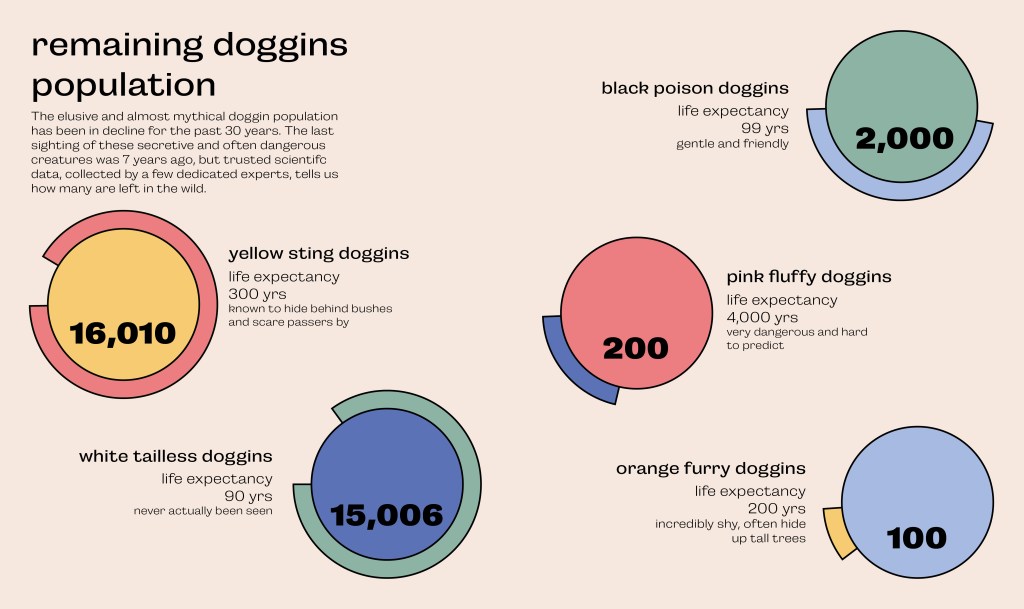
The content is a bit of a mix jumping around all over the place. I think this fits with the childlike nature of the project and the content of the magazines I am using as inspiration. Children don’t think in a linear way, so I didn’t want my magazine to be too linear.
Design Development
Keeping the ideas of play, not fearing failure and not worrying about how things are supposed to look at the forefront of my mind I started to try and develop my initial designs further into a magazine. I tried to keep a childlike attitude, drawing and exploring potential ideas.

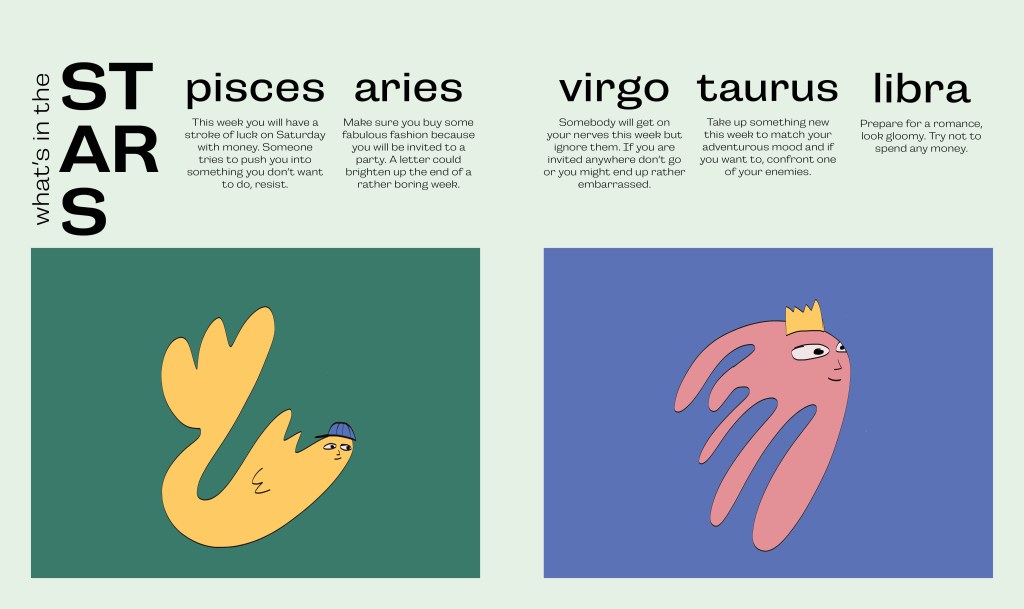
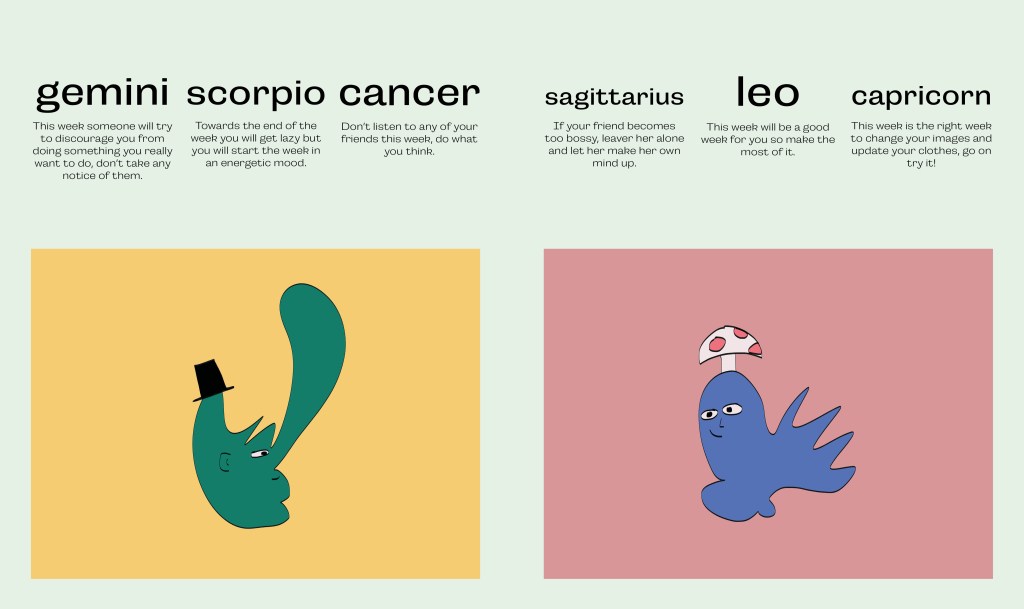
I created some illustrations using procreate (to boldly try a new way of working). I drew without direction or worry about the outcome, trying to channel my inner child.


Despite the non-linear content and free childish nature of the elements within my design, I wanted to ensure it still functioned as a whole. I played around with the design to give it a united look and colour scheme that would keep the magazine together and run as a thread throughout.


I played around with the idea of adding some additional small pages , possible circular in between other pages. But after trying them out I didn’t think they really added anything to the design.


I created a mockup to see how my progress was looking and to post it on the ideas wall
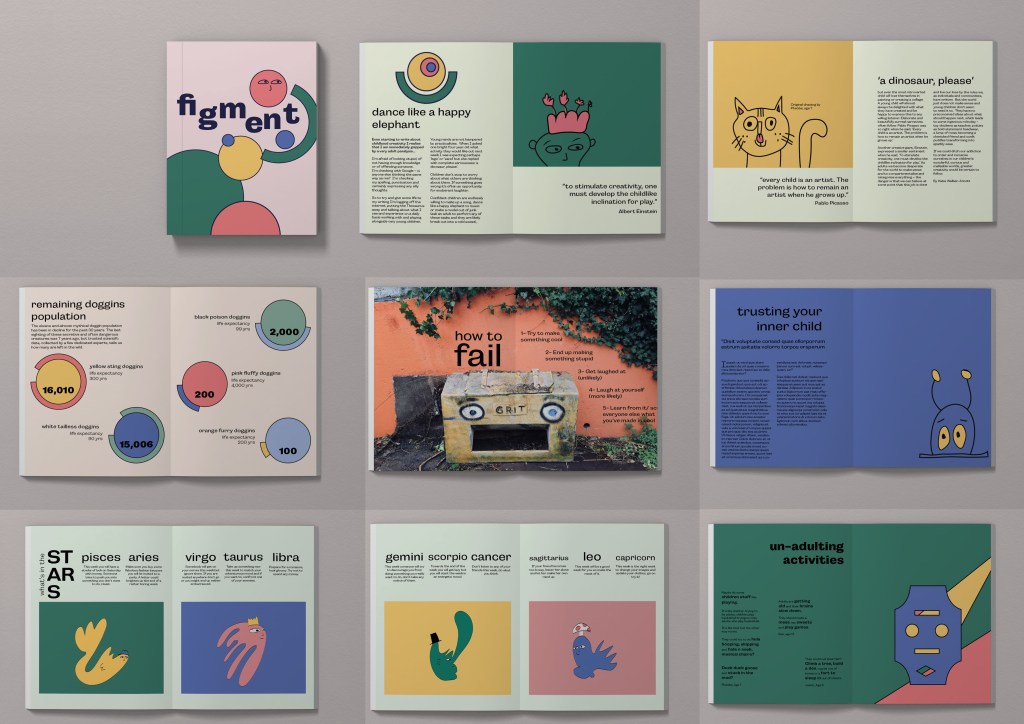
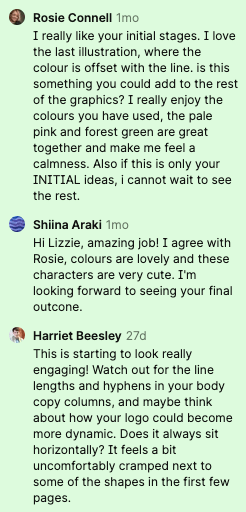
From the feedback I got, it seemed as if my design direction was a good one for this project and the colours and style was engaging.

I looked at adding photography into the magazine, but felt that it didn’t sit that comfortably alongside the rest of the design, so I decided to adapt the photo into another illustration.


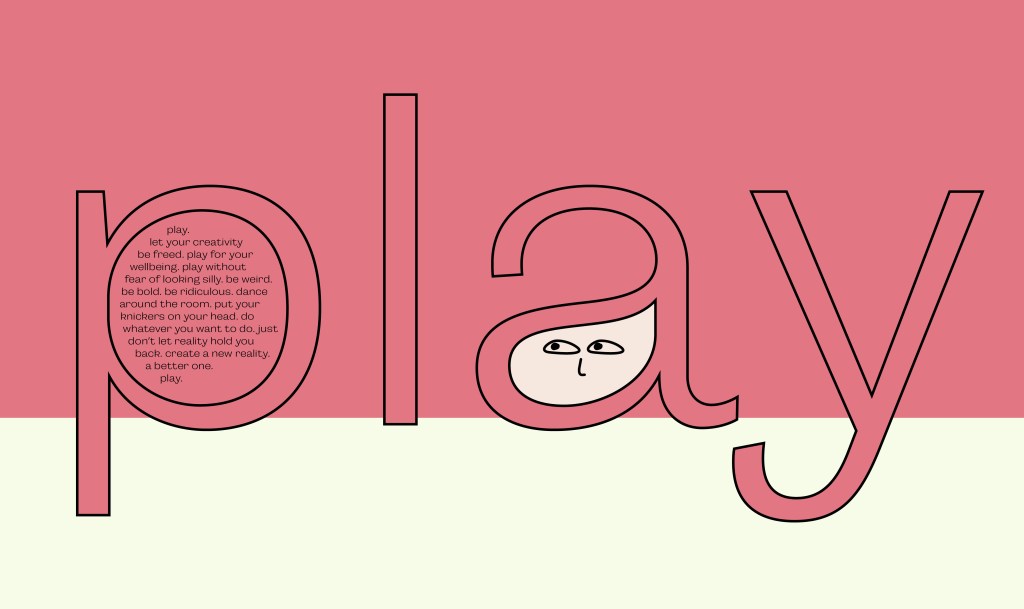
I also decided to disregard capital letters in my titles. I think this gives the design a welcoming and childlike look to it, as well as a way to push some editorial boundaries. Children wouldn’t care about capital letters in their work, so why should I? This is the only form of punctuation I am ignoring however, as I want to keep the magazine readable and not start too far away from the balance of keeping my work beautiful but still bonkers.
Production development
I think the cover is important to help me engage with my target audience. It needs to be tactile but also beautiful and well made.


I worked out how to separate my cover designs into layers that I could cut through. I then printed some out and cut through to give me an idea of how the covers would look.

From this I decided that the paper would need to be very thick to work well with these cut outs. I also think I need to take another look at the design to ensure the cover is still strong enough when the sections have been cut out.


From this point I have created a finalised design, that I will aim to get printed and have the cover cut out, as well as a couple of small cut outs within the magazine. I have added in some extra pages to allow the reader to add in their own drawings and ideas.


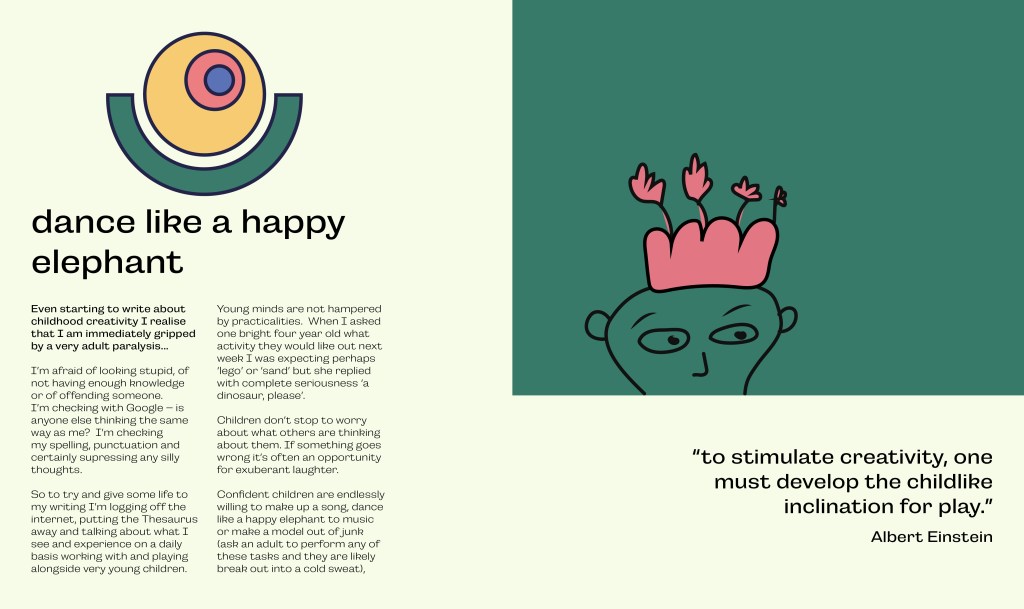
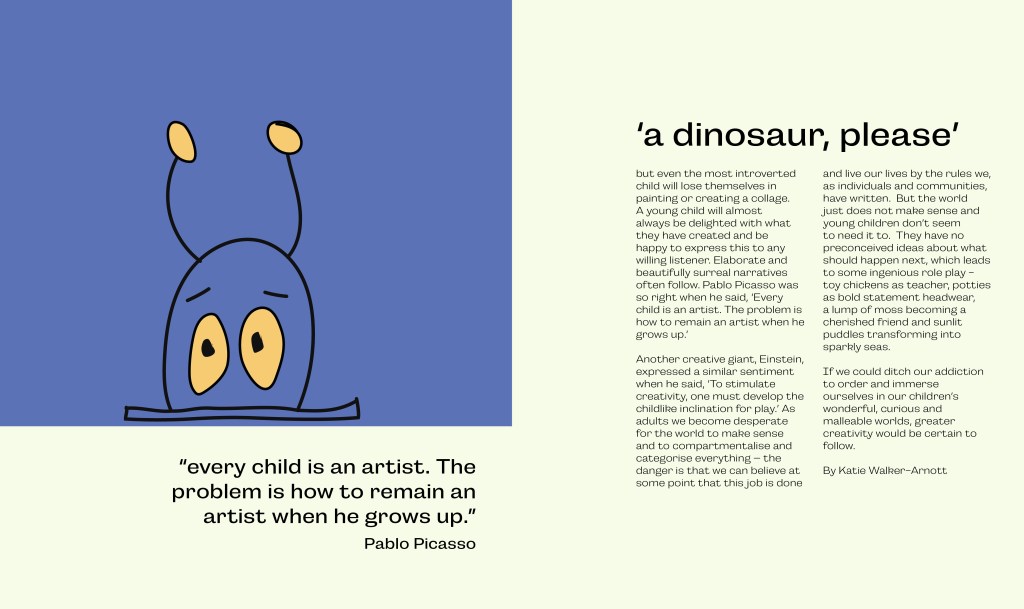


Reflection
I have really enjoyed researching and designing this magazine. I think what I have produced so far fits quite well with the design direction I settled on. However, I would like to spend some more time researching and trying out different productions techniques. So far due to lack of time and budget I have only been able to print my design out myself and play around with it as a prototype. I want my magazine to be produced in a way that is really beautiful and tactile, and I think this can only be produced with quality production methods. During the next week or so I will try to get my magazine printed so I can realise the full potential of the design.
I would have also liked to have more input from young children in my project. What I failed to anticipate is the extended timescale needed when trying to speak with young families. The majority of people I reached out to where keen to help, but busy family life got in the way and they were unable to provide me with feedback during the short amount of time I had to work on this project.
I also think I set myself a big challenge to complete in such a short time. I could carry on researching, working alongside children and creating more and more content happily if I had the time to. I think getting children deeply involved in creating this magazine would be very valuable and definitely something I would do if I had more time.
Reference list
MILES, John R. 2020. “The Importance of Play as an Adult.” Ascent Publication [online]. Available at: https://medium.com/the-ascent/the-importance-of-play-as-an-adult-931e311c0cdf [accessed 9 Oct 2021].
THE SCHOOL OF LIFE. 2014. “On Children’s Art.” The School of Life Articles [online]. Available at: https://www.theschooloflife.com/thebookoflife/the-most-valuable-piece-of-art-in-your-world/ [accessed 9 Oct 2021].
THE SCHOOL OF LIFE. 2021. “The Importance of Play.” The School of Life Articles [online]. Available at: https://www.theschooloflife.com/thebookoflife/the-importance-of-play [accessed 9 Oct 2021].
TYLER, Yolanda. 2019. “The Importance of PLAY in Adulthood and Childhood | Yolonda Tyler | TEDxBoggyCreek.” http://www.youtube.com [online]. Available at: https://www.youtube.com/watch?v=sSx_csPHE0c [accessed 9 Oct 2021].


Leave a Reply