Plan for the week:
- Review and evaluate my previous work and personal objectives and ambitions
- Watch and analyse lectures
- Research studios and designers I admire and explore projects they have created
- Explore the subjects that interest me and create a selection of themes to consider
Review my work:
The project I have enjoyed making the most so far during my masters has been my childhood magazine project in GDE740. It was fun, bright and freeing. I think it helped me to push my personal boundaries and the final product was something that bought a smile to peoples faces, which I really liked about it.
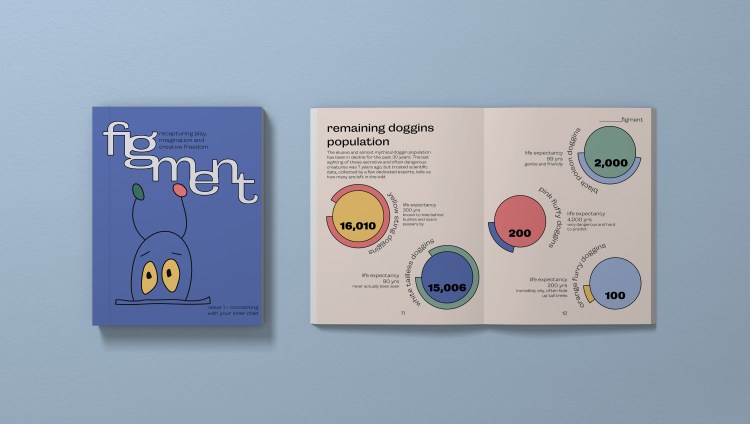
I enjoyed exploring play within this project, but I didn’t get to explore it as deeply as I would have liked so this is something I would definitely be interested in revisiting.
In GE710 I enjoyed getting out into my local area and exploring what was around me and noticing things I had previously ignored. This bought me a lot of inspiration.
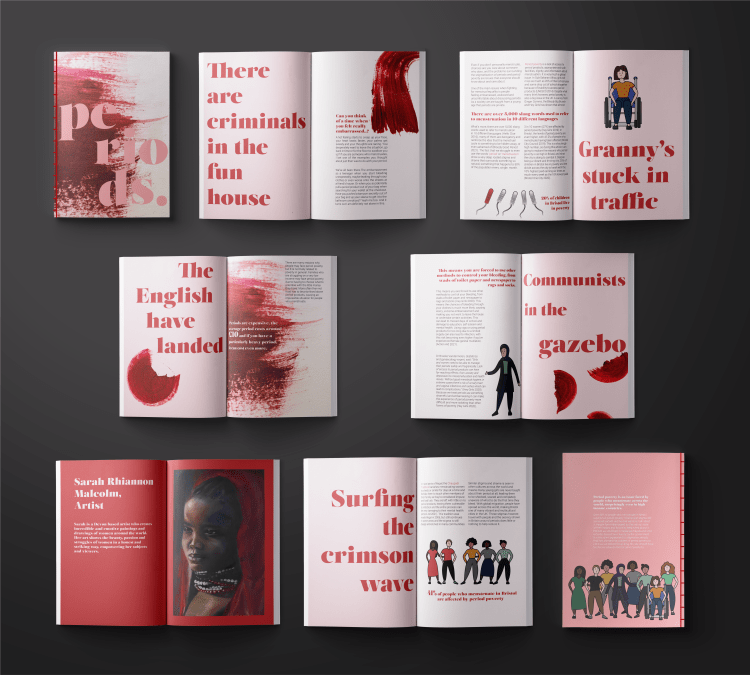
I enjoyed the exploration I did into period poverty in GDE720. I found the process of investigating an issue that is not talked about enough really interesting and enlightening and also enjoyed trying to translate this into something that communicated a message to a diverse audience.
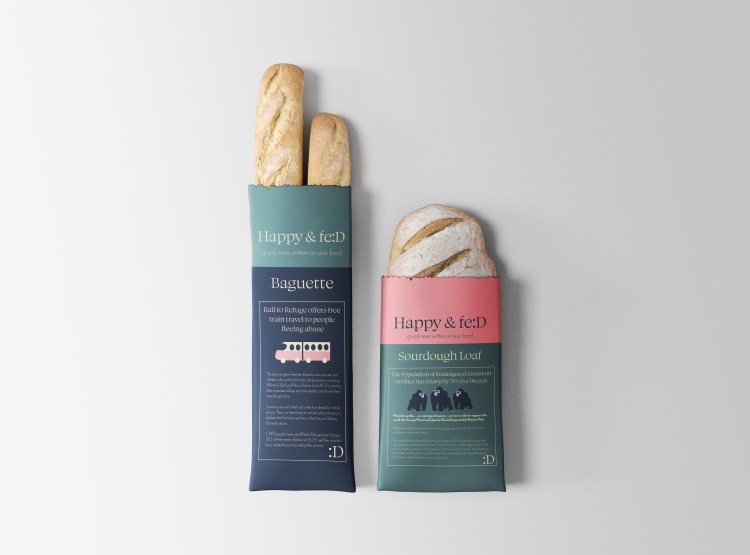
In GDE730 I looked at trying to brighten peoples days with happy news stories on food packaging. This is another project I really enjoyed making as it was positive and different.
Personal ambitions:
I have always wanted to play a part in improving the world, even if only in a small way. I want my design to create positive impact to the planet, to communities or to individuals.
I enjoy crafting brand identities and helping brands to communicate their message. I want to work with charities, environmentally conscious brands, innovative future facing brands and brands that care.
I want my work to make people smile, improve their lives or change their way of thinking.
I want my project to be something I am proud to put in my portfolio and that shows my personal ambitions and interests to future employers or clients.
I want to ensure the project I undertake is fun, allowing me to make the most of being able to do work just for me.
Notes:
I found writing down things in my notebook to be really helpful. I didnt set myself a particular structure but wrote things I liked, things I cared about and things that interested me down to try and find connections and potential ideas.


What I care about:
The planet, biodiversity and climate change. The effects that climate change is already having on our daily lives and how to prepare/ adapt to this.
The lives of individuals – helping people living with Parkinson’s to live better.
Cycling – making the industry more welcoming to all, rewriting its elitist male history.
Joy and play – making daily life filled with more joyful moments, helping people to find joy and play within their lives. Encouraging adults to play. Brightening up peoples lives – its been a hard few years and they way we all live our lives can often be damaging to joy.
Lectures:
Lecture 2 – Social Change – Joseph Pochodzaj
Notes:
- What role can designers play in engaging with sociopolitical landscape around us- designers can respond to the social issues in the world. They can inform, inspire and influence behaviour.
- Design is a tool for political transformation that must consider social and ethical points of view.
- Where you are from is important as are your core values. Acknologing and engaging the other viewpoints ifs important in our work- looking beyond our own echo chambers – looking locally and globally. How do these global issues affect the people around me?
- Look around me- what issues affect the people close to me and communities. Seek the unseen – voices unheard or experiences marginalised. Not just my own experience. New perspectives – I shouldn’t just look to prove what I already know- need to find new knowledge.
- Archives and histories are important to discover the potential futures. Women’s rights movements. Protests and social movements.
- e.g Great Diary Project – social narratives and stories of everyday people throughout history- more diverse not just important white men. An alternative narrative about human existence.
- Language and voice. Visual language in political manifestos. Look at data in speeches to understand rhythms and patterns in the language use across the century.
- How to get people to engage with your work. Places and sites or people and communities. Walking streets and observing. Social or political hidden in plain sight – see world differently. Helps to understand the present conditions of everyday life. Understand dynamics in world around us.
- Design research as you go. Working directly with people is important. Meaningfully engage them – how do community benefit from the project- what is left behind. How does community continue the project you started.
- Your own voice, values and experiences can be at the heart of your work.
Things to research further:
- Social design.
- IDEO studio.
- Critical Design.
- Victor Papanek – design for the real world
- Psycogeography
- Age of no Retirement
Analysis:
Designers can play an important role in social, political and environmental issues by influencing behaviour, raising awareness and communicating. To do this successfully however you need to move out of your own experience and engage with others, look from the other side of the problem, speak to people and understand their experiences.
Joseph believe in the importance of archives, as well as collecting history from people who are often left out of traditional history. This is where the Great Diary Project comes in as a really powerful idea and way to craft a more honest and inclusive history.
Explore some subjects that interest me and create a selection of themes to consider
Environment, helping people, nature, art, cycling, climate change,
Joy and play
- How to play – the importance of play for adults
- Using design to influence behaviour and get people to play
- Creating space for play in our daily lives – less serious
- Appreciating everyday joy
- Adding positivity to a negative world
- Making people smile
Definition: Play
To engage in activity for enjoyment and recreation rather than a serious or practical purpose.
Some playful projects and ideas to explore further:
- https://www.itsnicethat.com/news/cossette-playing-in-public-the-bentway-graphic-design-020921
- https://www.itsnicethat.com/features/karl-toomey-playfulness-in-creativity-opinion-210120
- https://www.itsnicethat.com/articles/nazif-lopulizza-art-121219
- https://www.itsnicethat.com/articles/nina-bachmann-illustration-081119
- https://www.itsnicethat.com/articles/martyna-makes-illustration-061021
Climate change futures – preparation at home
- Flooding – Rain gardens – adapting our existence for future problems
- Issues that affect us now and will affect us in future- what can we do to help as individuals and homeowners
- Small changes for individuals
- Re-wilding and reconnecting with nature
- How can I help people make more sustainable food choices?
Explore Further
https://www.ideo.com/case-study/designing-the-future-of-urban-farming
Parkinsons
- Improving mood
- Improving mobility
- Making parts of life easier to navigate
- How can design support people living with this disease
Explore Further
- https://www.designindaba.com/articles/creative-work/mileha-soneji-designs-low-tech-tools-parkinson%E2%80%99s-patients
- https://www.dandad.org/awards/professional/2020/233084/shake-the-typeface-with-parkinsons-disease/
- https://www.dandad.org/awards/professional/2013/outdoor-advertising/19824/parkinsons-everyday/
- https://www.dandad.org/awards/professional/2020/233118/printed-by-parkinsons/
Inclusive cycling
- History and future
- Exploring the sport and its history – how to make it something for all – change the narrative
Explore Further
- https://www.dandad.org/awards/professional/2020/232974/paul-smiths-cycling-scrapbook/
- https://www.itsnicethat.com/articles/george-fletcher-hinault-typography-graphic-design-200818

Studios and work
Nice and Serious

https://niceandserious.com/work/rainforest-alliance
A beautiful looking campaign that reminds people that their decision can have impact, uniting them with others who are trying to help support the planet.

Another project they have worked on is Useless website https://niceandserious.com/work/useless-website
This is also beautifully created as a way to give people more power over their sustainability decisions by helping them to easily find places to shop more sustainably.
I think what makes both these projects interesting is that they are focusing on what the individual can do in the fight against climate change, but not putting pressure or blame onto them.
Thinking about climate change is overwhelming and trying to find a way to help communicate the issues can often feel even more so. Nice and serious write about how looking at one small part can often be the best way to approach it and then bringing that part home to audiences in a real and tangible way that makes them feel.
“The sheer scale of it only ends up making reasonable actions, like eating less meat or abstaining from face-touching, feel like pitifully inadequate solutions.”
(Tapper 2020)
Potential Research Questions
1. How can I use design to influence behaviour and get adults to play more?
2. How can design help people to find more joy in daily life?
3. How can I use design to help people make more sustainable food choices?
4. How can design support people living with Parkinson’s?
5. How can design help to portray cycling as a more inclusive sport?
6. How can design help people to deal with climate change affects at home?
7. How can I use design to encourage people to re-wild their gardens/towns/cities?
I posted my potential questions onto the ideas wall for feedback from others on my course to see what captured other peoples imagination and interest.


I thought about how these questions could work as projects as well as the realities around them, such as how I could easily access the potential target audience. In previous projects I have struggled to get hold of harder to reach audiences in the time scale and around work commitments. Even though this project is a lot longer, I want to ensure I can get some really valuable insights from others during the process.
Top Three
I focused these potential ideas into my top three questions. These are still very broad however, so I will need to focus down on specific areas within these subjects.
- How can I use design to influence behaviour and get adults to play more? The benefits of play on mood, creativity and innovative thinking.
- How can I use design to help people make more sustainable food choices?
- How can design help to change the narrative around cycling and turn it into a more inclusive sport?
Questions to ask myself about my potential project questions
- How might I do it?
- Who is this for, who is my audience?
- What are my aims objectives and purpose?
- What framework will I use in my project?
- How might I investigate my research question?
- What has happen in my chosen area of research already?
- What connections can I make?
- What research methods could I use?
- What is my position in relation to my chosen area of research?
- How will project benefit me and others?
Research – Play
Erin Jang – Design Is [Play] — Making Work Play / Making Play Work
- Look at things with unusual eyes. inspiration is often right in front of you. Magic in mundane. Uncommon in the common. Unexpected beauty
- Photos of every unique moment in usual places. Colour in each street in Manhattan. Made into an instillation. Look at city with different eyes.
- Make it yourself. Play is to make with hands and different tools and materials.
- Curiosity is important.
- Play – a need to solve a small problem in your daily life.
- Making a gift for someone you love. Bringing joy to another person.
- Make meaningful unexpected experiences. Do small things with great love. How can I make a mundane moment more surprising and memorable.
- Children are super creative and good at play- we should let them lead sometimes.
- Make work that invites play. Surprise and delight.
- Where is play needed? What part of life needs more play?
Reference list
JANG, Erin. 2019. “Design Is [Play] — Making Work Play / Making Play Work.” http://www.youtube.com [online]. Available at: https://www.youtube.com/watch?v=SF1UneWMYZQ&feature=emb_logo [accessed 31 Jan 2022].
TAPPER, Tom. 2020. “How to Communicate a Clusterf*Ck – Nice and Serious.” niceandserious.com [online]. Available at: https://niceandserious.com/journal/how-to-communicate-a-clusterf-ck [accessed 31 Jan 2022].


Leave a Reply